How to Avoid Common Outdoor Decking Mistakes in 2026?

Time:2026-10-23 Author:Ethan
0%

Outdoor decking can transform a garden, balcony, or poolside area, but small installation errors can create expensive problems in 2026. Homeowners now expect safer materials, longer service life, and cleaner environmental credentials. Yet even advanced composite boards cannot correct a weak frame, poor drainage, or careless measurements.

So, what are the common mistakes when installing outdoor decking? The most frequent include fixing boards too tightly, ignoring ventilation, using unsuitable screws, and failing to protect cut ends. Uneven joists can leave visible dips beneath bare feet. Standing water may collect beside a wall. A beautiful surface can still hide a dangerous foundation.

Scott Schuttner, author of The Deck Handbook and an experienced deck specialist, has emphasized, “A deck is only as good as its foundation.” That warning remains practical. Installers should inspect the ground, confirm joist spacing, and allow manufacturers’ expansion gaps. They should also consider sunlight, rain direction, soil movement, and future maintenance access.

Some mistakes happen because the project looks simple. It is not.

A rushed installer may trust a quick visual check. That can be misleading. I have seen plans that appeared accurate until the first board met a crooked corner. Another weakness is assuming every product follows identical instructions. It does not. This guide examines common failures, realistic prevention methods, and the decisions that experienced builders still reconsider before installation. Better decking begins with patient preparation, not attractive boards.
How to Avoid Common Outdoor Decking Mistakes in 2026?

Assessing Site Conditions and Decking Needs

How to Avoid Common Outdoor Decking Mistakes in 2026?

Before choosing boards, assess the site as if water already won. Walk the proposed footprint after rain. Mark puddles, soft soil, tree roots, utility lines, and shaded corners. NOAA’s 1991–2020 Climate Normals provide local precipitation, temperature, and snowfall data for planning exposure. Use those records, not memory. A sunny inspection can mislead you.

Check elevation, drainage, and ground movement before sizing the deck. The EPA’s Climate Change Indicators report found that heavy precipitation increased by about 70% in the contiguous United States from 1958 to 2012. That history supports deeper drainage planning, especially on clay soils or sloped lots. ASCE 7-22 also provides site-specific wind, snow, and seismic criteria that influence structural design. Local authorities may require additional footing and setback rules.

Define the deck’s real use. A quiet seating platform needs different spacing than a dining area with a grill and frequent traffic. Measure door swings, stair landings, furniture paths, and future additions. Keep clearance around vents and avoid trapping water against the building wall. I have seen attractive layouts fail because the first step landed beside a downspout. Small detail. Big repair.

Ask whether the soil report is current. It may not reflect recent grading or buried fill. That is where confidence becomes a problem. Recheck assumptions with a qualified local professional before excavation. A practical site sketch, dated photos, climate data, and verified measurements create a more reliable decking plan.

Choosing Suitable Materials for Climate and Use

Choosing decking by appearance alone is a common mistake in 2026. A pale board may look calm in a showroom, then absorb heat beside a south-facing window. Start with local climate records, not a sales photograph. Measure rainfall, humidity, winter freezing, and daily sun exposure. In coastal areas, salt-laden air can accelerate corrosion around fasteners. In dry regions, rapid moisture loss may cause timber to shrink and split. These details determine whether the deck remains safe and comfortable.

Match the material to the deck’s actual use. A family deck with muddy shoes needs a surface that cleans easily and resists abrasion. Around a pool, choose a texture that offers grip when wet, while avoiding deep grooves that trap dirt. Dense hardwood can perform well, but it needs careful sealing and regular inspection. Pressure-treated timber may cost less, yet it can demand frequent maintenance in harsh weather. Composite boards resist some moisture problems, but they can become very hot and expand noticeably. Leave the movement gaps specified by the manufacturer. Skipping them is expensive.

I once inspected a deck where beautiful boards were installed over poor drainage. Water stayed beneath them after every storm. The owner blamed the material, but the real failure was the design. That mistake still matters. Check ventilation, joist spacing, screw compatibility, and ground clearance before ordering boards. Ask a qualified local professional to confirm structural requirements and regional safety rules. No material is maintenance-free. A realistic care schedule is often more valuable than a perfect-looking sample.

How to Avoid Common Outdoor Decking Mistakes in 2026? Choosing Suitable Materials for Climate and Use

Annual precipitation is a practical starting point when selecting decking materials. In wetter climates, prioritize capped composite or naturally durable wood, reliable drainage, corrosion-resistant fasteners, and sufficient ventilation. In hot, dry climates, consider UV-resistant finishes, thermal movement, and wider airflow gaps. In cold climates, use freeze-resistant installation details and prevent standing water.

Climate figures show approximate 1991–2020 annual precipitation normals for representative U.S. locations, based on NOAA climate-normal data.

Planning Structure, Drainage, and Safety Features

How to Avoid Common Outdoor Decking Mistakes in 2026?

A strong deck begins with a measured plan, not attractive boards. Mark the footprint with stakes and string before buying materials. Check door swings, window access, and nearby trees. A small drawing can reveal awkward steps and weak support points. Use footings suited to local soil, frost depth, and expected loads. Ask a qualified professional to review the structure when conditions are uncertain. I once underestimated soil movement beside a garden wall. That shortcut caused uneven settlement the following season.

Drainage deserves equal attention. Set the deck surface with a gentle fall away from the building. Keep water from collecting against walls, posts, or stair landings. Leave consistent gaps between boards, because wet timber expands and debris blocks narrow spaces. Install suitable flashing where the deck meets the house. Without it, hidden moisture can damage framing. I used too few inspection points on an earlier project. Maintenance became harder than expected.

Tips: Sketch water paths after heavy rain. Use a level, tape measure, and moisture-resistant fasteners. Keep stairs uniform in height and depth. Add secure handrails where falls are possible. Check guard spacing carefully, especially around children. Cover sharp edges and countersink exposed screws. Walk the finished deck at night, too. Poor lighting often reveals safety problems that daylight hides.

Installing Deck Boards with Proper Spacing and Fasteners

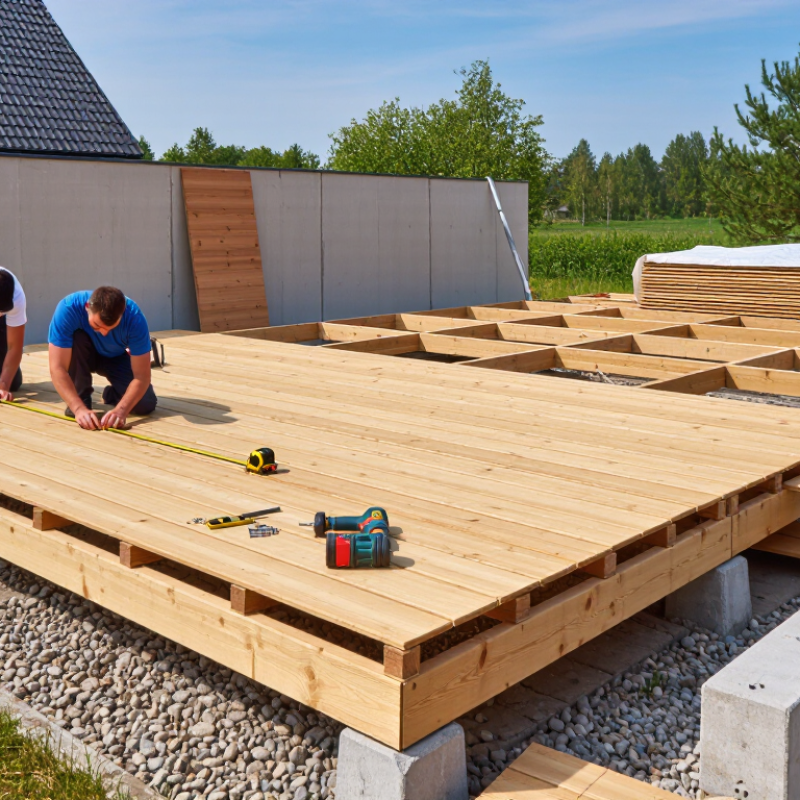
Outdoor decking failures often begin with small installation errors. Deck boards need room to expand, drain, and dry. A practical gap is usually 3/16 inch, but local moisture conditions and board specifications matter. Wetter climates may require slightly wider spacing.

Use a spacer at every joist instead of trusting your eye. Keep gaps consistent around posts, walls, and stairs. Measure several boards before installation. I once assumed every board had identical moisture content, and the finished gaps changed noticeably after a rainy week. That mistake was avoidable.

Choose corrosion-resistant fasteners suited to outdoor exposure. Install two fasteners at each joist, keeping them evenly spaced from the board edges. Predrill near board ends to reduce splitting, especially with dense or dry timber. Drive screws flush with the surface, not deeply below it. Overdriving creates pockets where water collects.

Check that joists are level and properly aligned before laying boards. A twisted joist can make perfect spacing look uneven. Leave adequate ventilation beneath the deck, and keep end joints supported. A thin pencil line, a simple spacer, and patient measurements often prevent expensive repairs.

Small gaps matter.

Maintaining the Deck to Prevent Long-Term Damage

Outdoor decking mistakes often begin with neglected maintenance. A deck may look sound while moisture quietly enters small cracks, joints, and screw holes. Inspect it every few months, especially after heavy rain or freezing weather. Walk across each board and notice soft spots, raised edges, or unusual movement. These details often appear before serious damage.

Keep leaves, soil, and water from collecting between boards. Use a soft brush and mild soap for routine cleaning. Avoid aggressive pressure washing, which can strip wood fibers and force water into vulnerable areas. Check drainage around the deck as well. A blocked gutter can keep one section damp for weeks. That happened on a deck I maintained, and the damaged boards were hidden beneath outdoor furniture.

Fasteners deserve attention. Tighten loose screws carefully, but do not bury them deep into the surface. Replace rusted hardware with suitable exterior-rated fasteners. Seal exposed end grain and repair small splits before winter arrives. Do not coat a damp deck. It may appear dry on top while retaining moisture underneath. I have made that mistake myself, and the finish peeled within one season. Maintenance is rarely difficult, but inconsistent timing causes most long-term problems. Test cleaning or sealing products on a hidden area first, because even similar boards can react differently.

FAQS

How should I plan an outdoor deck before buying materials?

Mark the footprint with stakes and string. Check door swings, windows, trees, steps, and support points.

How can I choose suitable footings for a deck?

Consider local soil, frost depth, and expected loads. Uncertain conditions deserve review by a qualified professional.

How should a deck handle rainwater?

Give the surface a gentle fall away from the building. Keep water away from walls, posts, and stair landings.

What board spacing is suitable for outdoor decking?

A gap near 3/16 inch often works, but moisture conditions and board specifications matter. Wetter areas may need wider gaps.

How should deck boards be fastened?

Use corrosion-resistant exterior fasteners. Install two fasteners at each joist, evenly spaced from the edges.

What should I check before laying deck boards?

Confirm that joists are level, aligned, and properly supported. Twisted joists can make consistent spacing appear uneven.

How often should an outdoor deck be inspected?

Inspect it every few months, especially after heavy rain or freezing weather. Walk across each board and notice movement or soft spots.

How can I clean and maintain a deck safely?

Remove leaves, soil, and standing water between boards. Use a soft brush and mild soap for routine cleaning.

When should I repair fasteners, splits, and surface coatings?

Tighten loose screws carefully without burying them. Replace rusted hardware with suitable exterior-rated fasteners. Seal exposed end grain and repair small splits before winter.

Conclusion

Avoiding common outdoor decking mistakes in 2026 starts with carefully assessing the site, including soil stability, sunlight, moisture, ventilation, intended use, and local weather conditions. Selecting materials that match the climate and expected foot traffic can reduce warping, slipping, fading, and premature decay. A well-designed deck should also include a stable structural framework, effective drainage, adequate ventilation, and safety features such as secure stairs, reliable railings, and suitable lighting. Before installation, consider what are the common mistakes when installing outdoor decking, including ignoring ground conditions, failing to allow for expansion, using unsuitable fasteners, and creating inadequate spacing between boards.

During installation, deck boards should be aligned accurately, spaced to support water runoff, and attached with corrosion-resistant fasteners appropriate for the chosen material. Long-term care is equally important: clean the surface regularly, inspect for loose connections or damaged boards, keep drainage paths clear, and address moisture problems promptly. Consistent maintenance helps preserve the deck’s appearance, strength, safety, and service life.

Ethan

Ethan

Ethan is a seasoned marketing professional with a deep expertise in our company's innovative product line. With a passion for sharing knowledge and insights, he takes the lead in regularly updating our corporate blog, where he explores industry trends, product features, and effective marketing......