Bamboo panels are gaining attention in China’s interior and furniture markets, but humid climates expose their weakest points. Warm air, condensation, and poor ventilation can cause swelling, edge lifting, staining, or adhesive failure. This guide examines China’s top 10 bamboo panel options and explains how to maintain bamboo fiber panels in humid climates.
The International Bamboo and Rattan Organisation (INBAR) identifies bamboo as a rapidly renewable material with strong potential for engineered products. However, sustainability does not guarantee moisture resistance. Product quality depends on species, fiber preparation, resin selection, pressing temperature, surface sealing, and edge treatment. The FAO Forest Products Annual Market Review also emphasizes that durability and market performance depend on proper processing and end-use conditions. That distinction matters.
Check the technical sheet.
Reliable manufacturers should provide moisture content, density, formaldehyde emission, dimensional stability, and bonding information. Testing methods should align with recognized standards, such as ISO wood-product procedures and relevant Chinese panel standards. During practical inspections, a sealed edge often performs better than an attractive but exposed cut edge. A small bathroom cabinet can reveal problems quickly: darkened corners, raised fibers, and a faint musty smell may appear after repeated wetting.
Some maintenance advice remains imperfect. Climate, installation quality, and panel composition vary widely. Therefore, this introduction does not treat one coating or cleaning routine as universally reliable. Instead, it combines manufacturer documentation, recognized testing principles, and field-based observations. Readers should verify current certificates, moisture-resistance ratings, and warranty conditions before selecting any panel for kitchens, bathrooms, balconies, or other high-humidity spaces.
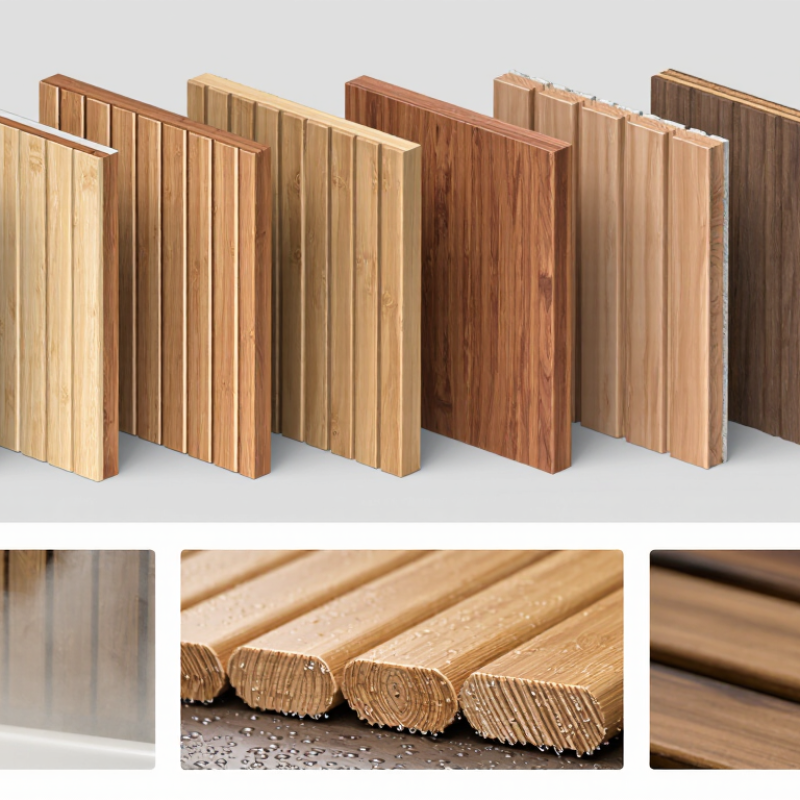
China’s humid-climate panel market includes ten practical bamboo types: horizontal laminated, vertical laminated, strand-woven, bamboo scrimber, three-layer panels, five-layer panels, bamboo plywood, veneer-faced panels, finger-jointed panels, and exterior-treated panels. Each behaves differently. Strand-woven and scrimber panels usually have higher density, but trapped moisture can still cause edge swelling. Laminated panels may show glue-line movement when humidity changes repeatedly.
The USDA Forest Products Laboratory’s Wood Handbook, FPL-GTR-282, explains that hygroscopic materials expand and contract with moisture variation. Bamboo panels need similar attention. Keep indoor relative humidity near 40–60%, where possible. Use a calibrated moisture meter. ISO 22157:2019 provides recognized methods for measuring bamboo density, moisture content, and mechanical properties. These tests improve purchasing decisions, but they do not replace site inspection.
Store panels flat on spacers, at least 100 millimeters above concrete floors. Leave air gaps between stacks. Seal cut edges, especially on veneer-faced and finger-jointed panels. For kitchens, bathrooms, and balconies, use a compatible low-emission coating and inspect joints every three months. Never trap damp panels beneath impermeable flooring. FAO’s Global Forest Resources Assessment 2020 identified bamboo as a significant non-timber forest resource, yet maintenance practices remain inconsistent across projects. That gap deserves attention. I have seen beautiful panels fail at unsealed edges, not across their surfaces. Humidity is rarely the only problem. Poor ventilation often finishes the job.
When comparing China’s top 10 bamboo panels, moisture resistance should guide the decision. A beautiful surface means little if the core swells near a window or sink. Ask suppliers for water absorption, thickness swelling, and humidity-cycle test results. Testing methods matter.
Inspect the panel edges carefully. Open fibers and rough cuts often absorb moisture first. Look for sealed edges, stable adhesives, and a dense, evenly pressed structure. In my experience, a 24-hour water test reveals surface weakness, but it cannot predict years of seasonal humidity. Request independent laboratory reports when available. Check whether results apply to the exact thickness and construction you plan to purchase.
Room conditions also change the risk. Bathrooms, kitchens, and coastal interiors need stronger protection than dry living rooms. Maintain ventilation, wipe standing water quickly, and leave expansion space during installation. A panel rated for indoor humidity is not automatically waterproof. That distinction is easy to miss. I once underestimated a sheltered wall because it looked dry; condensation later appeared behind the panel. The lesson is uncomfortable: product data and site conditions must be judged together. Ask how the panel performs after repeated wet and dry cycles, not only after one short immersion test.
Assessing moisture resistance before choosing bamboo panels is essential. The chart below compares common exposure conditions using a practical moisture-risk index, where 1 indicates low risk and 5 indicates very high risk.
Keep indoor relative humidity generally between 40% and 60%, prevent standing water, seal exposed edges, and inspect panels regularly in kitchens, bathrooms, basements, and other humid areas.
Preparing bamboo panels for installation in damp environments requires more than wiping away surface moisture. Bring the panels indoors and let them acclimate for 48 to 72 hours. Keep them flat, separated by thin spacers, and away from walls or concrete floors. The room should have stable ventilation and moderate humidity. A moisture meter helps confirm that the panels and wall substrate are ready.
Inspect every panel before cutting. Look for swollen edges, open joints, dark stains, or a sharp musty smell. Do not install damaged material. Seal exposed cut edges with a suitable moisture-resistant coating, especially around sinks, windows, and floor-level sections. The wall must be clean, dry, and level. Uneven surfaces can trap water behind the panels. That mistake is easy to miss.
Tips: Leave expansion gaps at the perimeter. Follow the installation guide for the recommended spacing. Use corrosion-resistant fasteners in humid rooms. Keep panel joints away from direct water spray when possible. Seal penetrations around pipes and outlets carefully. I prefer checking moisture twice, because one reading can be misleading. In coastal areas, panels may need longer acclimation. Plan for that delay. Freshly installed bamboo should still have airflow around it, not a sealed, wet cavity.
China Top 10 Bamboo Panels: How to Maintain Them in Humid Climates?
Bamboo panels absorb and release moisture like other hygroscopic materials. The USDA Forest Products Laboratory’s Wood Handbook explains that moisture changes can cause swelling, shrinkage, and surface stress. Keep indoor relative humidity between 30% and 50%, a range recommended by the U.S. Environmental Protection Agency. Use a digital hygrometer near the panels, not beside an air-conditioner outlet. Check it daily during rainy months.
Apply a moisture-resistant, low-emission coating to every exposed surface, including edges, drilled holes, and cut ends. Two thin coats usually perform better than one heavy coat. Allow complete curing between applications. A breathable penetrating finish may suit decorative walls, while a tougher water-based clear coating suits furniture or frequently touched panels. Follow the coating supplier’s technical data sheet. Do not seal damp bamboo.
Keep panels at least 50 millimeters away from wet floors and splash zones. Improve ventilation behind wall-mounted panels with a small air gap. Repair scratches quickly, because damaged finishes absorb moisture faster. Clean with a barely damp cloth, then dry the surface immediately. Avoid soaking, steam cleaning, and strong alkaline detergents.
One practical mistake is treating only the front face. Moisture can still enter through the back and edges. No coating lasts forever. Inspect blistering, darkened joints, and raised corners every three months. The ASTM D4442 moisture-content method can support professional testing when swelling repeatedly returns.
Practical maintenance priorities for bamboo panels used in humid indoor environments
| Rank | Maintenance Area | Recommended Practice | Practical Target or Frequency | Why It Matters in Humid Climates |
|---|---|---|---|---|
| 1 | Indoor Relative Humidity | Use a digital hygrometer and maintain a stable indoor relative humidity level. Operate ventilation, air conditioning, or a dehumidifier when moisture levels rise. | Aim for approximately 40%–60% RH. Avoid keeping the room above 70% RH for extended periods. | Bamboo is hygroscopic and absorbs or releases moisture as indoor humidity changes, which can cause swelling, shrinkage, or joint movement. |
| 2 | Panel Acclimation | Store panels flat in the installation room, away from direct water exposure, and allow them to adjust to the indoor environment before installation. | Allow about 3–7 days, or follow the project specification and the panel manufacturer’s moisture requirements. | Acclimation reduces the risk of installing panels that are significantly drier or wetter than the surrounding room. |
| 3 | Protective Surface Coating | Apply a compatible water-resistant finish, such as a waterborne polyurethane or another coating specified for bamboo and interior wood surfaces. | Seal all exposed faces and recoat according to the coating system’s wear schedule and condition. | A continuous coating slows moisture exchange and helps protect the surface from stains, humidity-related discoloration, and light abrasion. |
| 4 | Edge and End-Grain Sealing | Give special attention to cut edges, end sections, drilled openings, joints, and other exposed areas. Use a compatible edge sealer before installation or immediately after cutting. | Inspect every exposed edge after cutting and reseal damaged or uncoated areas promptly. | Edges and end sections generally provide faster paths for moisture entry than fully finished faces. |
| 5 | Water and Spill Control | Wipe spills immediately with a clean, slightly damp cloth, and never allow standing water to remain on or near the panels. | Remove liquid spills within a few minutes. Keep panels away from leaks, wet cleaning equipment, and persistent condensation. | Localized moisture can produce dark marks, edge swelling, finish failure, or deformation even when average room humidity is acceptable. |
| 6 | Cleaning Method | Dust with a soft microfiber cloth or vacuum with a brush attachment. For deeper cleaning, use a well-wrung damp cloth and a pH-neutral cleaner suitable for finished wood surfaces. | Clean routinely according to traffic levels, but keep the surface only lightly damp and dry it afterward. | Excess water and harsh alkaline, acidic, abrasive, or solvent-based cleaners can damage the finish and expose bamboo fibers. |
| 7 | Ventilation and Air Circulation | Maintain airflow around the panels and avoid blocking ventilation grilles or placing panels tightly against damp walls without a suitable installation system. | Provide regular air exchange, especially during rainy seasons, and keep bathrooms, kitchens, and laundry areas adequately ventilated. | Air movement helps prevent trapped humid air, condensation, mildew growth, and uneven moisture conditions behind the panel. |
| 8 | Leak and Condensation Inspection | Check nearby plumbing, windows, roofs, HVAC equipment, exterior walls, and concealed service areas for leaks or condensation. | Inspect at least monthly during wet seasons and immediately investigate staining, musty odors, or soft areas. | Repeated moisture exposure from a building defect can damage bamboo panels regardless of the quality of the surface treatment. |
| 9 | Mold and Finish Damage Monitoring | Look for black spots, greenish growth, lifting veneer, cloudy coating, open joints, or localized swelling. Isolate the moisture source before repair. | Perform a visual inspection every 1–3 months and after severe storms, flooding, or prolonged high humidity. | Early intervention can prevent surface contamination and moisture damage from spreading into joints, backing materials, or adjacent finishes. |
| 10 | Repair and Replacement | Lightly clean and abrade compatible finishes before recoating. Replace panels that remain swollen, delaminated, structurally weakened, or mold-damaged after the moisture source is corrected. | Repair small coating defects promptly; do not cover active mold or trapped moisture with a new finish. | A new coating cannot reliably correct dimensional damage or seal moisture that remains inside the panel assembly. |
General note: Exact coating compatibility, installation gaps, moisture limits, and cleaning products should be confirmed against the panel construction, finish system, local building conditions, and project specifications.
Bamboo panels can perform well in humid climates, but moisture requires regular attention. In practice, I inspect panels every month, especially near sinks, windows, and exterior walls. Condensation often gathers along edges first. Wipe dust with a soft, dry cloth, then use a damp cloth with mild, pH-neutral detergent. Avoid soaking the surface. Dry it immediately with a clean towel.
Look closely for swelling, open joints, dark spots, peeling finish, or a musty smell. Press gently around suspicious areas. A soft section may indicate trapped moisture behind the panel. I once ignored a small dark mark near a window, and the damaged area later became larger. That mistake was avoidable. Keep indoor humidity near 40–60% when possible, and improve airflow with ventilation or a dehumidifier. Do not cover damp panels with paint or sealant.
Tips: Check corners after heavy rain. Keep furniture slightly away from walls. Repair loose edges quickly with a suitable moisture-resistant adhesive. Small surface scratches may need light sanding and refinishing, but sanding through the protective layer can worsen moisture absorption. Follow the panel supplier’s repair instructions. If panels feel soft, smell strongly of mold, or show spreading discoloration, contact a qualified building professional. Record inspection dates and photos; simple records make gradual damage easier to judge.
Common options include horizontal laminated, vertical laminated, strand-woven, scrimber, three-layer, and five-layer panels. Bamboo plywood, veneer-faced, finger-jointed, and exterior-treated panels are also used. Each responds differently to moisture.
Strand-woven and scrimber panels usually have higher density. However, trapped moisture may still swell their edges. Dense does not mean waterproof.
Aim for roughly 40% to 60% relative humidity indoors. Some guidance recommends 30% to 50%. Use a calibrated digital hygrometer near the panels.
Store them flat on spacers. Keep them at least 100 millimeters above concrete floors. Leave air gaps between stacks. Do not trap damp panels under sealed flooring.
Apply a compatible, low-emission moisture-resistant coating to every exposed area. Seal edges, cut ends, and drilled holes. Two thin coats often work better than one thick coat.
Yes. Treat the front, back, edges, and openings. Moisture can enter from hidden areas. I once underestimated the back surface.
Leave a small air gap behind wall-mounted panels. Keep panels away from wet floors and splash zones. Poor ventilation can worsen swelling, even when the surface looks dry.
Inspect joints, corners, and coatings every three months. Look for blistering, darkened joints, raised corners, or swelling. Rainy months deserve closer attention.
Use a barely damp cloth, then dry the panel immediately. Avoid soaking, steam cleaning, and strong alkaline detergents. Water should not sit on the surface.
Unsealed edges often absorb moisture first. Repeated humidity changes can move glue lines and stress surfaces. My earlier assumption was too simple: humidity is rarely the only problem.
Maintaining bamboo panels in humid climates begins with selecting the right type for the environment. Different bamboo panel structures offer varying levels of density, coating protection, and moisture resistance, so panels should be assessed for swelling, warping, edge absorption, and surface durability before purchase. Proper preparation is also essential: allow the panels to acclimate indoors, keep them elevated from damp floors, seal exposed edges, and ensure that the installation area has adequate ventilation and effective water protection.
To understand how to maintain bamboo fiber panels in humid climates, apply a suitable protective finish and keep indoor humidity as stable as possible through ventilation or dehumidification. Clean the surface with a soft, slightly damp cloth and avoid excessive water or harsh chemicals. Regular inspections can identify discoloration, loose joints, mold-like spots, or surface damage at an early stage. Small issues should be dried, cleaned, and repaired promptly, while seriously damaged panels may need professional evaluation or replacement.

Haven Decoration