Is PU stone wall panel safe for fireplace surrounds? The answer depends on heat, clearance, installation, and the fireplace type. Polyurethane stone panels can create a convincing masonry appearance, but polyurethane is combustible. It should never touch a flame, firebox opening, stovepipe, or unprotected hot surface.
James A. Milke, Ph.D., a respected fire protection engineering scholar, has emphasized a crucial principle: “The performance of a material depends on the fire exposure, not simply its name.” That warning matters here. A panel may look like stone, yet its polymer core can soften, discolor, smoke, or ignite when exposed to excessive heat. Appearance is not protection.
This guide examines how to use PU panels more safely around fireplaces. It covers manufacturer-approved clearances, noncombustible backing, heat shields, ventilation, and proper edge treatment. Gas, electric, and wood-burning fireplaces create different risks. Wood-burning units demand particular caution because embers and radiant heat can travel beyond the opening.
Measure the surface temperature.
Do not guess.
A practical installation should keep panels outside the listed heat zone. It should also follow the fireplace manual and the panel manufacturer’s instructions. Local building and fire-safety requirements may apply. A qualified installer can verify clearances and inspect the finished surround.
There is no universal answer. Some installations may work with suitable separation and protection. Others may be unsafe, even when the panel appears undamaged. That uncertainty deserves respect. If the product lacks fire-performance data, choosing a genuinely noncombustible surround is the more dependable decision.
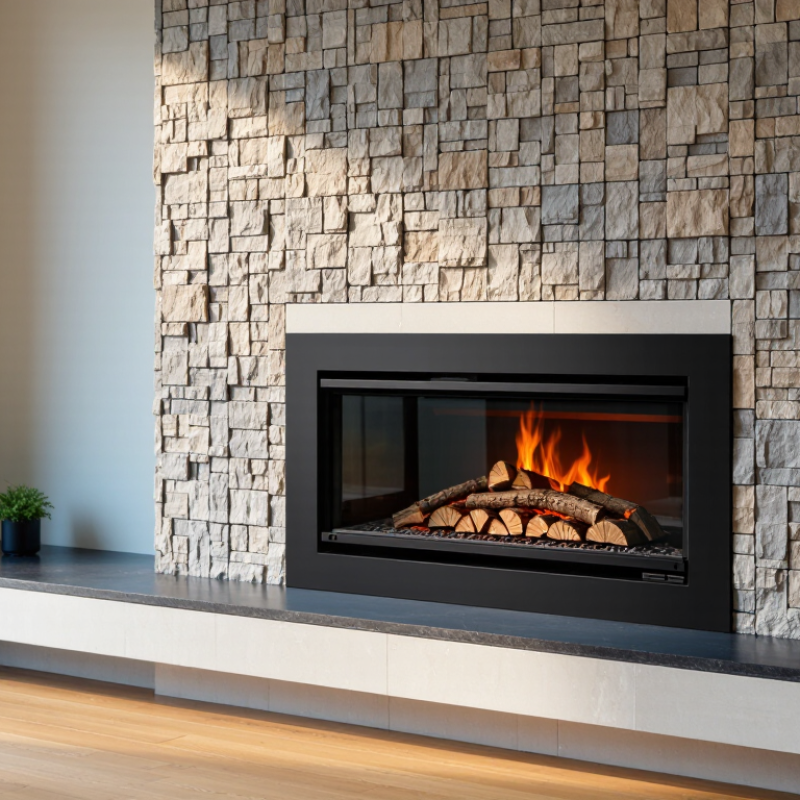
Before placing PU stone wall panels near a fireplace, measure heat, not appearance. Fireplace glass, metal trim, and rising air can create different temperatures within inches. Use a calibrated infrared thermometer after the fireplace reaches its normal operating condition. Record the hottest reading at the panel edge, joints, and adhesive line. Repeat the test during a longer burn. One quick reading is weak evidence.
Compare these readings with the panel’s tested continuous-use temperature. Request the complete fire-test report, installation instructions, and required clearances. ASTM E84 or UL 723 reports flame spread and smoke development. It does not establish safe fireplace clearance. A Class A result also does not mean the panel is noncombustible.
NFPA’s Home Heating Fires report estimated 44,210 home heating fires in the United States from 2016 to 2020. The figure included 480 civilian deaths and 1,370 injuries. The data covers heating equipment broadly, but it shows why small clearance errors deserve attention.
Tips: Follow the fireplace manual before the panel manual. Keep every listed air gap open. Do not hide combustible backing behind trim. Ask a qualified installer to verify the wall assembly and local requirements. If the panel’s temperature limit is missing, stop. I would treat incomplete testing as a serious warning, not a minor paperwork gap. A neat installation can still be unsafe.
How to Safely Use PU Stone Wall Panels Near Fireplaces?
PU stone panels can create a warm, realistic fireplace wall. Yet heat-resistant does not mean fireproof. The installation area matters more than appearance. NFPA’s Heating Equipment Fires report for 2016–2020 found that heating equipment caused 13% of reported home fires and 18% of home fire deaths in the United States. This risk deserves careful material selection.
Choose PU stone panels with documented heat-resistance testing and a clearly stated maximum service temperature. Ask for laboratory reports based on recognized methods, such as ASTM E84 or equivalent surface-burning tests. These tests measure flame spread and smoke development. They do not make a panel safe for direct flame contact. Follow the fireplace manufacturer’s clearance instructions and NFPA 211 guidance. Install panels outside the required heat zone. Use a suitable noncombustible backing where the design requires it. A panel may pass a test, but still fail under prolonged radiant heat. That assumption needs challenging.
Tips: Measure wall temperatures after several fireplace cycles. An infrared thermometer can reveal hot spots near the mantel and corners. Keep joints tight, but do not block required ventilation gaps. Never cover vents, inspection openings, or protective shields. Use heat-rated adhesive and mechanical fixing when specified. Recheck the surface after the first few uses. Small cracks, discoloration, or softening are warning signs. I would rather leave a wider visual gap than force a perfect finish. Safety is sometimes less attractive.
PU stone wall panels are decorative polymer products, not real masonry. Before installation, inspect the fireplace surround, wallboard, joints, and hearth for cracks, moisture, soot, or loose material. A damp wall can weaken adhesives and conceal heat damage. Remove dust with a dry brush, then repair the substrate using materials approved for high-temperature areas. Keep air vents, inspection doors, and chimney access points uncovered.
Plan panel placement around the appliance manufacturer’s required clearance. Do not guess from appearance. The National Fire Protection Association reports that heating equipment caused about 12% of reported U.S. home fires and 18% of home fire deaths between 2016 and 2020. Small gaps matter. Leave a clearly defined noncombustible zone around the firebox, flue, and hot trim unless a tested installation system permits otherwise. Cement board, masonry, or another listed heat-resistant assembly may be required behind the panels.
Many installers test the surface by touch. I would not rely on that. Wall temperatures can change after hours of burning. Use a thermometer during several fires and stop if the panel, adhesive, or substrate shows softening, discoloration, odor, or separation. NFPA 211 and local building requirements should guide the final clearance. A laboratory rating applies only to the exact tested assembly, not every PU panel installation.
A fireplace wall is not a normal accent wall. PU stone panels contain combustible polymer foam, so heat and clearance controls must guide every installation. NFPA’s Home Heating Fires report recorded about 44,210 residential heating fires annually from 2016 to 2020. Small mistakes can become serious.
Check the appliance listing before cutting panels. NFPA 211 and local building provisions require clearance from combustible materials, but the exact distance depends on the fireplace design. Do not copy a clearance from another project. Keep panels outside the stated zone, or install a tested, noncombustible protection system designed for that appliance. Any air gap must remain open and correctly supported. Blocking it with adhesive or trim can trap heat.
Measure twice. Then measure again. During use, inspect the panel edge, adhesive, and nearby joints for discoloration, odor, softening, or distortion. ASTM E84 flame-spread results may describe surface behavior, but they do not prove that a panel is suitable beside a fireplace. Ask for full test documentation and maximum service temperature, not only a marketing fire rating. A qualified installer should verify clearances, substrate condition, ventilation, and local requirements. One honest limitation remains: field temperatures can vary with fuel, airflow, and chimney performance. If the surface becomes unusually hot, stop using the fireplace and obtain professional advice.
The chart shows practical surface-temperature control zones for PU stone panels near fireplaces. Keep panels out of direct flame and hot-air discharge, use a non-combustible heat shield where required, and verify the panel manufacturer's tested temperature rating and minimum clearance before installation. These values are planning thresholds, not a replacement for local fire codes or the fireplace installation manual.
After installing PU stone wall panels near a fireplace, inspect the finished surface before lighting a fire. Check every panel edge, joint, and corner for lifting or movement. Look for soft spots, visible adhesive, warping, or color changes. A slight gap can become serious when heat repeatedly cycles through the wall. Do not ignore small defects. They may indicate poor bonding or excessive heat exposure.
Keep combustible panels outside the fireplace opening and away from direct flame or hot surfaces. Follow the panel manufacturer’s temperature limits and local fire-safety requirements. Confirm that the fireplace surround, hearth, and protective barriers are correctly installed. If the panel feels unusually warm during use, stop and investigate. My own inspection habit is simple: run a hand near the surface, without touching hot areas, and compare both sides of the fireplace. Uneven warmth deserves attention.
Dust the panels with a soft, dry cloth every few weeks. Use mild soap and a damp cloth for stubborn marks, then dry the surface completely. Avoid abrasive pads, strong solvents, and open flames during cleaning. Recheck joints after seasonal fireplace use. Watch for cracks, bubbling, smoke stains, or a loose corner. Maintenance is easy to postpone. That is where mistakes begin. If damage appears, stop using the fireplace until a qualified installer or fire-safety professional assesses the area.
Only after checking heat readings, clearances, and the panel’s continuous-use temperature. Appearance proves nothing.
Use a calibrated infrared thermometer after normal operation. Measure the panel edge, joints, and adhesive line. One reading is weak evidence. Repeat the test during a longer burn.
Request complete fire-test reports, installation instructions, required clearances, and maximum service temperature. A surface fire rating does not prove fireplace suitability.
No. It may describe surface flame spread and smoke development. It does not establish safe fireplace clearance or noncombustibility.
Follow the fireplace manual and local requirements. Exact distances depend on the appliance design. Do not copy another project’s measurement.
No. Keep every required air gap open and properly supported. Blocking gaps can trap heat behind the panels.
Look for discoloration, unusual odor, softening, or distortion near edges, joints, and adhesive. Stop using the fireplace if the surface becomes unusually hot.
A qualified installer should check clearances, substrate condition, ventilation, backing, and local requirements. A neat finish can still hide a serious problem.
Stop the installation and request reliable documentation. Treat incomplete testing as a serious warning, not minor paperwork. That caution may feel excessive. It is still sensible.
Using PU stone wall panels around a fireplace begins with understanding the heat produced by the appliance and comparing it with the panels’ safety ratings and installation limits. The question “is pu stone wall panel safe for fireplace surrounds” cannot be answered without considering the fireplace type, nearby surface temperatures, ventilation, and the manufacturer’s specified clearances. Select panels designed for heat-exposed areas, and avoid placing them directly against flames, vents, or areas that exceed their rated temperature.
Before installation, inspect and clean the wall, repair uneven or damaged surfaces, and plan the panel layout so that all required gaps and protective zones remain open. Use suitable heat-resistant adhesives, fasteners, and backing materials, following the product’s installation guidance. After mounting, check that the panels are secure, evenly aligned, and safely separated from hot components. Regularly inspect for discoloration, warping, loose edges, or unusual odors, and stop using the fireplace if any damage appears. Proper planning, installation, and maintenance help create an attractive surround while reducing heat-related risks.

Haven Decoration