When considering outdoor decking options, many homeowners often wonder "how long does WPC decking last compared to real wood?" This question is crucial for those seeking durability and longevity in their investments. WPC, or wood-plastic composite, has gained popularity for its resilience and low maintenance. However, real wood brings a classic charm that WPC lacks.
WPC decking generally boasts a lifespan of 15 to 25 years, while high-quality real wood may last about 10 to 30 years, depending on the species and treatment. Factors such as climate, maintenance routines, and installation play significant roles in determining longevity. While WPC is resistant to pests and weather, it may warp or fade over time. Real wood, on the other hand, can be refinished and repaired, providing versatility.
Understanding the differences between these materials is essential. Each has strengths and weaknesses. It is not merely about choosing one over the other. Homeowners must weigh aesthetics against practicality. This decision can define outdoor spaces for years to come.
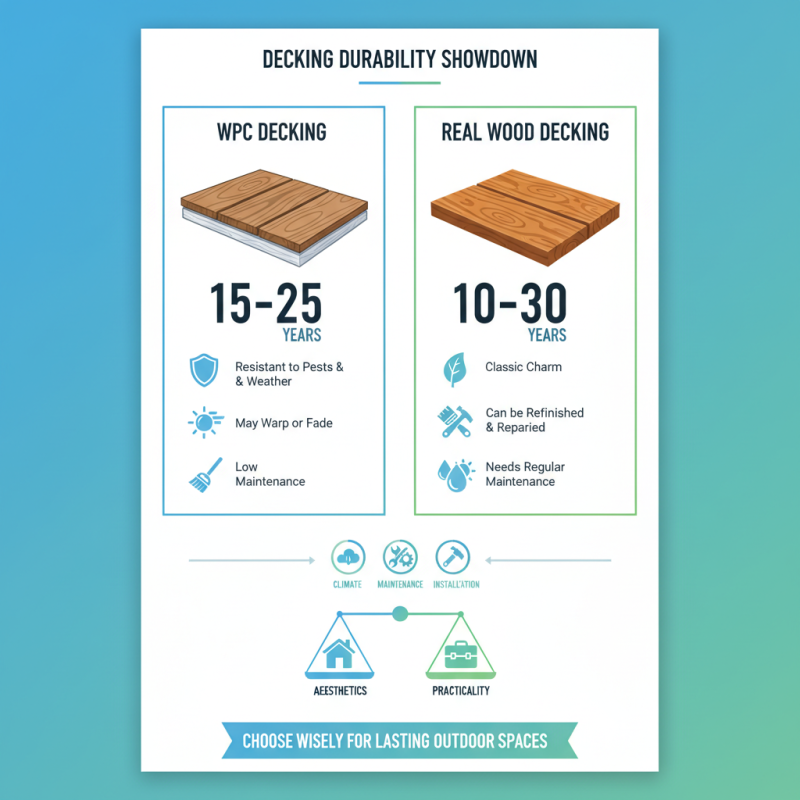
Comparison of WPC Decking and Real Wood Lifespans
When considering the lifespan of WPC (Wood Plastic Composite) decking versus real wood, several factors come into play. WPC decking generally boasts a lifespan of 25 to 30 years with proper maintenance. In contrast, real wood can last around 15 to 20 years depending on the type of wood and environmental conditions. This difference is significant, especially for homeowners looking for longevity.
WPC decking is resistant to rot, insects, and moisture. It requires less maintenance and is less prone to warping compared to wood. However, some argue that WPC lacks the aesthetic appeal of natural wood. Real wood offers a timeless beauty but demands regular upkeep. It needs staining, sealing, and protection from the elements. Choosing between them often comes down to personal preference and willingness to maintain.
It's important to note that while WPC is durable, it may not be perfect. Some may experience fading or scratches over time. Choosing high-quality WPC can make a difference, but it’s not guaranteed. Real wood can develop knots or splits, leading to concerns about safety and wear. Weighing these factors helps inform decisions, but perfection is difficult to achieve in either option.
Factors Influencing the Longevity of WPC Decking
WPC (wood-plastic composite) decking offers a distinct lifespan when compared to traditional wood. Factors affecting longevity include material composition, environmental conditions, and maintenance practices. Studies show that WPC decking can last between 25 to 30 years, significantly outpacing standard wood’s 10 to 15 years, especially in harsh climates.
One major influencer is the quality of the WPC materials. High-density composites tend to resist moisture, UV rays, and insects better than wood. A study from the Journal of Composite Materials confirms that UV exposure can reduce wood’s lifespan dramatically. Conversely, well-maintained WPC boards can retain their structural integrity longer.
However, WPC decking is not without its drawbacks. Some reports indicate that lower-quality WPC products may degrade if exposed to extreme weather or inadequate maintenance. Regular cleaning and occasional resealing can enhance durability, particularly in regions with high humidity or temperature fluctuations. While WPC may offer appealing longevity, it requires consistent effort to maintain optimal performance.
How Long Does WPC Decking Last Compared to Real Wood? - Factors Influencing the Longevity of WPC Decking
| Material Type |
Average Lifespan (Years) |
Maintenance Level |
Resistance to Weather |
Cost Comparison (per sq. ft.) |
| WPC Decking |
25-30 |
Low |
High |
$6-10 |
| Pressure-Treated Wood |
15-20 |
Moderate |
Medium |
$3-7 |
| Cedar Wood |
15-25 |
High |
Medium |
$5-12 |
| Composite Decking |
20-30 |
Low |
High |
$4-9 |
Maintenance Requirements for WPC Decking vs Real Wood
When comparing WPC (Wood Plastic Composite) decking to real wood, maintenance needs are quite different. WPC decking requires less attention over time. It does not need regular staining or sealing. A simple wash with soap and water is often enough to keep it looking good. On the other hand, real wood demands frequent upkeep. Homeowners often sand, stain, and seal wood surfaces yearly to prevent rot and degradation.
However, maintaining real wood can be rewarding. The natural beauty of wood may enhance a home’s aesthetic. Many appreciate the rich colors and textures that develop over time. But, this beauty comes with a price. Failing to properly maintain wood can lead to serious issues, such as splintering or warping.
While WPC decking offers convenience, it is not without flaws. Some users report fading or discoloration over time. This can affect the overall appearance. While WPC is low-maintenance, it still requires some care. Regular cleaning helps preserve its look and functionality. Balancing these factors is essential for homeowners looking to make the best choice.
Environmental Impact on the Durability of Decking Materials
When considering the durability of decking materials, environmental factors play a critical role. Research indicates that Wood Plastic Composite (WPC) decking can last 25 to 30 years. In contrast, traditional wood decks generally need replacement every 10 to 15 years, depending on maintenance. However, this advantage can be overshadowed by the environmental impact of production. WPC decking, made from recycled materials, helps reduce waste. Yet, the manufacturing process can result in significant carbon emissions.
Weather conditions are vital for both decking types. High humidity can cause wood to warp and rot, while UV exposure can fade finishes. A study found that decks in coastal areas experience higher wear. They may require frequent maintenance or replacement. Moreover, pressure-treated wood may leach chemicals into the soil. This raises concerns. WPC decking has less environmental toxicity, yet it isn’t entirely free from ecological implications.
While WPC lasts longer than traditional wood, this doesn’t come without its flaws. Both materials require proper care. Even WPC decks can suffer from surface scratches or fading. Careful consideration of local climate can determine the best choice. Ultimately, decisions should reflect an understanding of the long-term environmental impacts and lifecycle of each material.
Cost-Effectiveness of WPC Decking Over Time
When considering decking options, WPC (Wood Plastic Composite) is becoming a popular choice. WPC decking is often seen as a cost-effective alternative to real wood. While real wood may require regular maintenance, WPC promises durability with less effort. Over time, this can lead to significant savings.
The initial investment in WPC decking may be higher than some wood types. However, its longevity and low maintenance requirements often lead to better value over decades. Unlike wood, WPC is resistant to rot, insects, and fading. These factors contribute to its appeal. Homeowners can enjoy their decks without the worry of frequent repairs.
Tips for choosing WPC decking: Look for products that have a solid warranty. Investigate the different finishes available to ensure you get the desired aesthetic. Keep in mind that while WPC is durable, its appearance may not fully replicate natural wood. Regular cleaning will help maintain its look and functionality, but do consider the initial energy you put into choosing the right type. This consideration will pay off in the long run.
FAQS
: WPC decking can last between 25 to 30 years, much longer than standard wood’s 10 to 15 years.
Material quality, environmental conditions, and maintenance practices are key factors affecting lifespan.
Yes, WPC requires less upkeep; usually, a wash with soap and water suffices.
Yes, lower-quality WPC may degrade in extreme weather or if not maintained properly.
Some users report fading or discoloration, impacting overall appearance.
Over time, WPC may save money due to its durability and low maintenance needs, despite a higher initial cost.
Regular cleaning and occasional resealing help preserve its functionality and appearance.
While WPC provides durability, its appearance may not fully replicate the natural look of wood.
Yes, look for products that come with a solid warranty for added assurance.
Real wood can enhance aesthetics, but it requires more frequent care to avoid issues like splintering.
Conclusion
When considering "how long does WPC decking last compared to real wood," it's important to examine their respective lifespans. WPC decking generally offers enhanced durability, lasting 25 to 30 years with minimal upkeep, while traditional wood may require more frequent maintenance and has a shorter lifespan, often around 15 to 20 years. Factors such as environmental conditions, exposure to moisture, and the quality of materials significantly influence the longevity of both options.
Maintenance is another critical aspect, as WPC decking requires less regular care than real wood, which often demands sealing and staining. Additionally, external environmental factors, such as UV exposure and weather patterns, can affect the durability of decking materials. While the initial investment in WPC may be higher, its long-term cost-effectiveness, combined with lower maintenance requirements, makes it a compelling choice for many homeowners looking for a lasting decking solution.

 Haven Decoration